
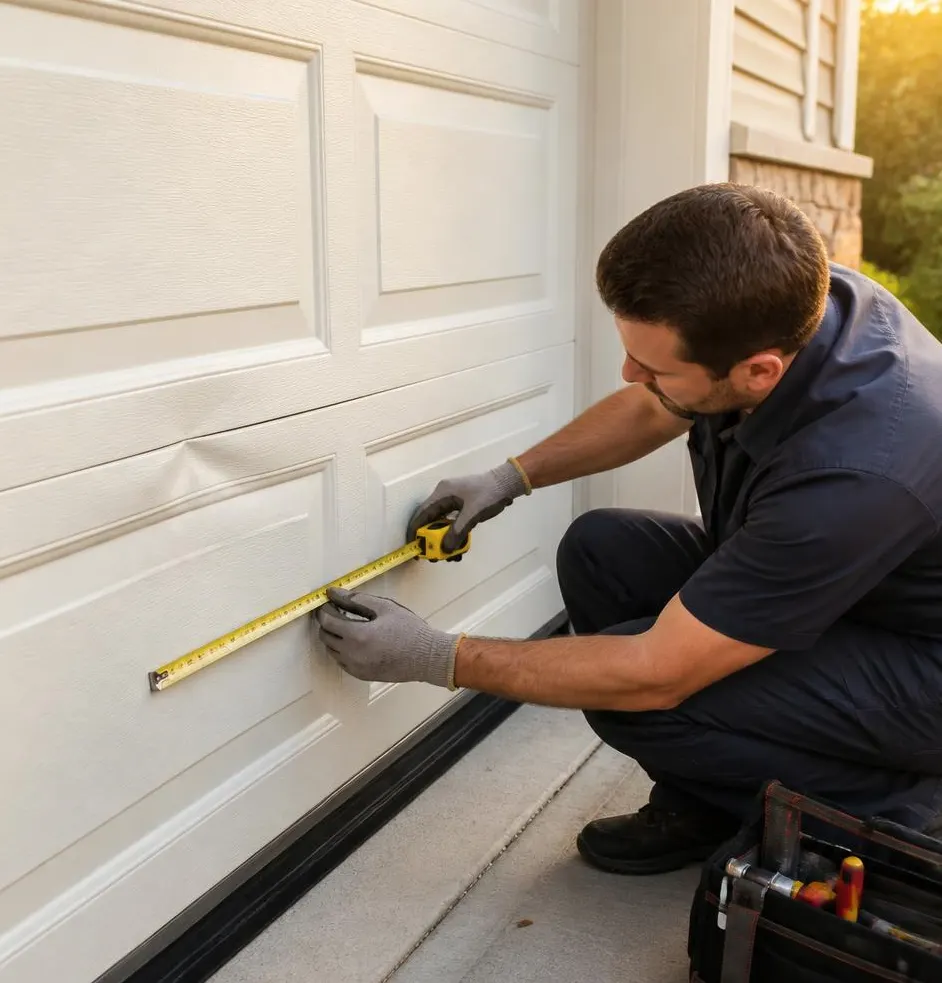
Short answer: the door itself is probably fine. The opener and the springs are where the real argument is.
If you've got a garage door from the 1990s or earlier and you're going back and forth about whether it's "dangerous" or just old, here's the quick version: the panels, the track, and the basic hardware are usually not a safety problem by themselves. What matters is whether the opener has a working auto-reverse safety system, and whether the springs are set up so a sudden failure doesn't send something flying. Everything else is mostly a maintenance and convenience conversation, not a safety one.
The one thing that's not optional: auto-reverse and photo-eye sensors
Since the early 1990s, garage door openers sold in the U.S. have been required to include two independent safety-reverse systems: a mechanical force sensor (the door reverses if it hits resistance) and photo-eye sensors (the two small electronic eyes mounted a few inches off the floor on either side of the track). If your opener predates that, or if someone "fixed" a nuisance problem by disconnecting the sensors years ago, that's the retrofit that actually matters. A door that doesn't stop or reverse when something — or someone — is underneath it is a real hazard, not a theoretical one.
To check: wave a broom handle through the photo-eye beam while the door is closing. It should stop and reverse immediately. Then try closing the door onto a 2x4 laid flat on the ground. It should reverse on contact. If either test fails, that's not a project for a weekend — replace or repair the opener before using the door again.
What this has to do with the weather here
Cold winters with road salt and ice are hard on photo-eye wiring and connectors near the floor — salt spray and moisture corrode contacts over years, which is a common reason sensors stop working reliably on older systems. If your sensors are original to a 1990s door, corrosion alone is a decent reason to have them inspected before winter, separate from the age of the opener itself.
Springs: the part people underestimate
Garage door springs store a dangerous amount of tension, and this is true whether the door is five years old or thirty. Two things matter here: whether the springs are properly balanced for the door's weight, and — if you have extension springs (the long springs that stretch along the horizontal tracks, common in older installs) — whether they have safety containment cables running through them. Without those cables, a spring that snaps can whip through the garage with real force. Torsion springs (the thick spring mounted horizontally above the door) are generally safer by design because they're under controlled tension on a shaft, but they still need to be sized correctly and replaced in pairs when they're worn.
If your extension springs don't have a cable threaded through the coil, that's worth retrofitting regardless of how well the rest of the door works. It's a small, inexpensive fix for a failure mode that can genuinely hurt someone.
What's fine to leave alone
- Solid wood or steel panels that aren't warped, rusted through, or delaminating. Cosmetic wear isn't a safety issue.
- Original track if it's still straight, properly aligned, and not bent from a bumped car or a loaded sled.
- Manual locks and older-style hardware, as long as they function and aren't a trip hazard.
- The door's overall style or design — nothing about a door looking dated makes it unsafe.
In other words, you don't need to replace a whole door just because it's old, and you don't need a smart opener with a phone app to be safe. You need the safety-reverse system working and the springs properly contained.
Where humid summers and storm season come in
Older doors — especially wood or composite ones from this era — can swell and bind during the humid stretch of summer, which sometimes gets misread as a "safety" issue when it's really a seasonal fit problem. Separately, spring storm season puts real wind load on garage doors, and an older door without reinforced bracing can flex more than a modern one under sustained gusts. That's a structural consideration worth asking about if your garage faces open ground or takes wind directly, but it's a different conversation from the sensor and spring question above.
When to call Willow Springs Garage Door
If your opener fails the auto-reverse test, if your extension springs don't have containment cables, or if you're just not sure what era your safety hardware is from, that's exactly what a garage door maintenance visit is for — we inspect the opener's safety systems, check spring balance and condition, and tell you plainly what needs fixing versus what's fine to leave alone. If a spring has already failed or the door won't move safely, that's spring replacement or emergency garage door service territory, and we'd rather you call before someone tries to force it open by hand.
If you're in Willow Springs, Justice, Hickory Hills, Palos Hills, Palos Heights, Burbank, Bridgeview, or La Grange and you want a straight answer about your older door, call Willow Springs Garage Door — we'll look at it honestly and tell you what's actually worth doing.